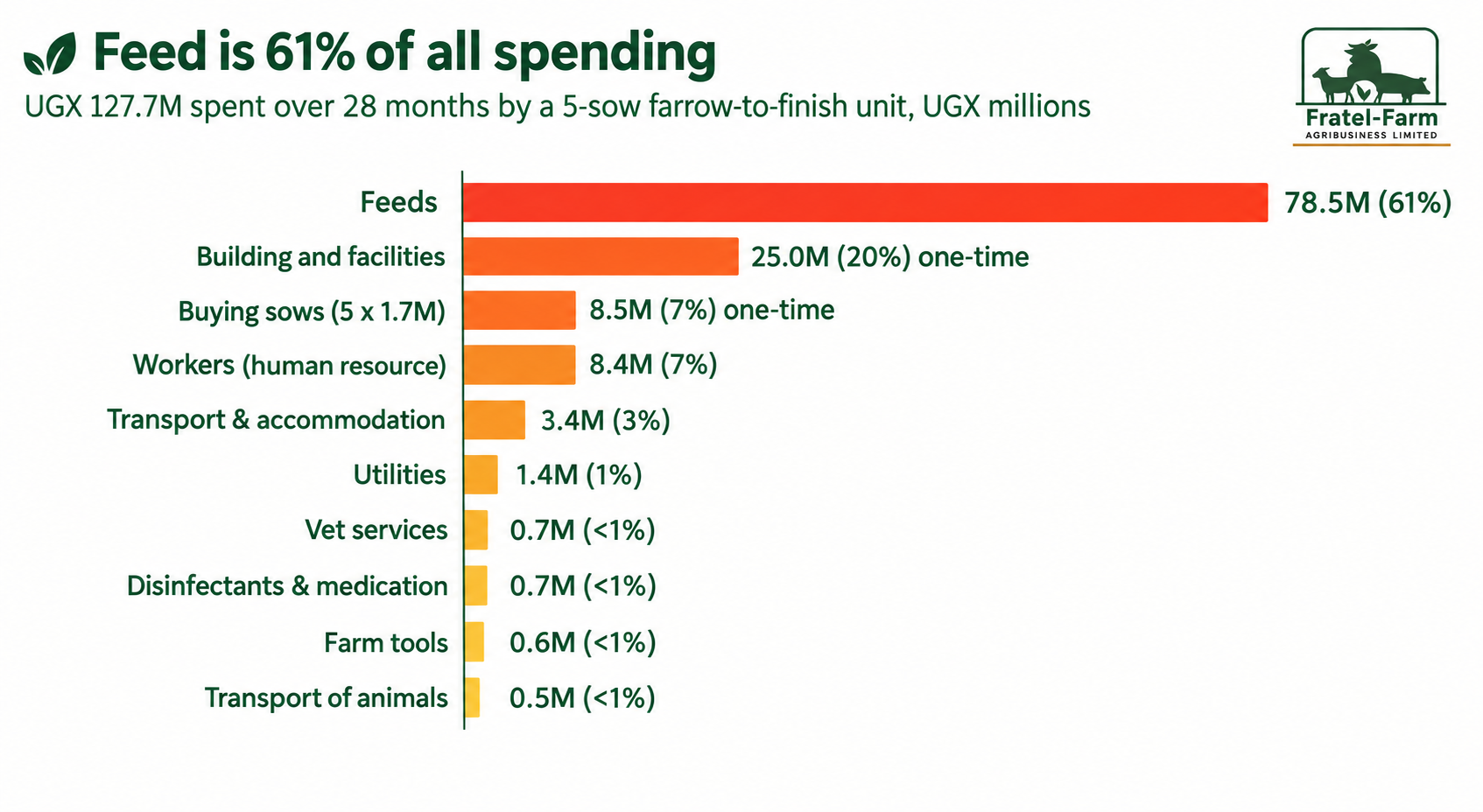
A 5-sow farrow-to-finish piggery spends about UGX 127.7 million over 28 months, and 61% of that money goes on feed. If you want to protect your cash flow, start with the feed store, not the pig house.
Many farmers start a piggery thinking the big expense is the building. The building is big, but you pay for it once. Feed is a bill that comes back every week for as long as there are pigs on the farm. That is where profit is made or lost.
This article looks at a simple case: a small-scale farmer running a farrow-to-finish unit (breeding sows, raising the piglets and selling them as finished pigs) from December 2026 to March 2029. We look at what it takes to get in, what it costs to keep going, and where the farmer's attention should go first.
Where the money goes
Feed is the business
Feed costs UGX 78.5 million, about three out of every five shillings spent. Leave out the one-time setup costs and feed is about 83% of everything it costs to keep the farm running.
That makes feed the best place to save. Cutting the feed bill by just 10% saves about UGX 7.9 million over the 28 months. That is almost what the farmer paid for all 5 sows.
Practical ways to bring the feed bill down:
- Buy at harvest. Buy maize, maize bran and other ingredients in bulk when prices are lowest, and store them dry.
- Mix your own feed where you can do it well. Local ingredients and a good formula usually cost less than ready-made feed. A poor mix is a false saving.
- Feed by stage. Sows, piglets, weaners, growers and finishers need different rations. Feeding everyone the same wastes money on some pigs and holds others back.
- Stop the waste. Use good feeders, keep feed dry, and control rats and birds. Feed on the floor is money on the floor.
- Sell on time. A pig kept past market weight keeps eating but adds little value. Plan your sales before the pigs are ready.
Entry costs: paid once, felt for years
Getting started costs UGX 33.5 million, or 26% of the total. That is the pig house and facilities (UGX 25.0 million) plus 5 breeding sows at UGX 1.7 million each (UGX 8.5 million). This is the capital you need before you sell a single pig.
Because you pay these costs only once, it is tempting to cut corners. Don't. Both of them decide how much the feed bill buys you for the next two years:
- A good house keeps pigs dry, cool and free of stress. Pigs that are comfortable turn more of their feed into meat. A cold, wet or crowded pen burns feed just to keep pigs warm and healthy.
- Good sows give bigger litters and piglets that grow faster on the same feed. A sow that saves you UGX 300,000 when you buy her can cost you far more in weaker litters.
The small costs that protect everything
Everything else (workers, transport, utilities, vet care, medication and tools) adds up to UGX 15.7 million, about 12%. Workers are the biggest of these at UGX 8.4 million.
The smallest lines deserve the most respect. Vet services and disinfectants together cost about UGX 1.4 million, roughly 1% of the total. Yet one outbreak of African swine fever or another serious disease can wipe out the sows, the growing pigs and every shilling already spent feeding them.
- Keep a footbath at the gate and limit visitors.
- Vaccinate, deworm and treat on schedule, with a vet you trust.
- Clean and disinfect pens between batches.
- Never cut this budget to save cash. It is the cheapest insurance on the farm.
Good workers matter for the same reason. A worker who notices a sick pig early, or feeds carefully without waste, earns their wage many times over.
Cash-flow priorities for the piggery farmer
In order of priority:
- Secure the feed budget first. Before you build or buy sows, know where 28 months of feed money will come from. Running costs average about UGX 3.4 million a month, most of it feed.
- Raise the entry capital separately. Pay for the house and sows from savings or long-term finance, never from feed money.
- Buy quality where it lasts. Spend on a sound house and good sows. They make every bag of feed go further.
- Control feed costs every week. Buy in season, mix well, feed by stage, stop waste and keep records of feed used against pigs sold.
- Protect the herd. Keep the vet and biosecurity budget untouched.
- Plan your sales. Line up buyers before pigs reach market weight so money comes in on time.
The bottom line
Once the house is built and the sows are in, your cash flow rises and falls with feed. Plan the feed budget before anything else, and every shilling you save on feed goes straight to your profit.
Fratel-Farm Agribusiness Limited: helping farmers grow profitable livestock enterprises.
📞 Need help with a piggery plan, a cash flow forecast or feed formulation?
Talk to Fratel Farm Agribusiness (U) Limited 🌱