
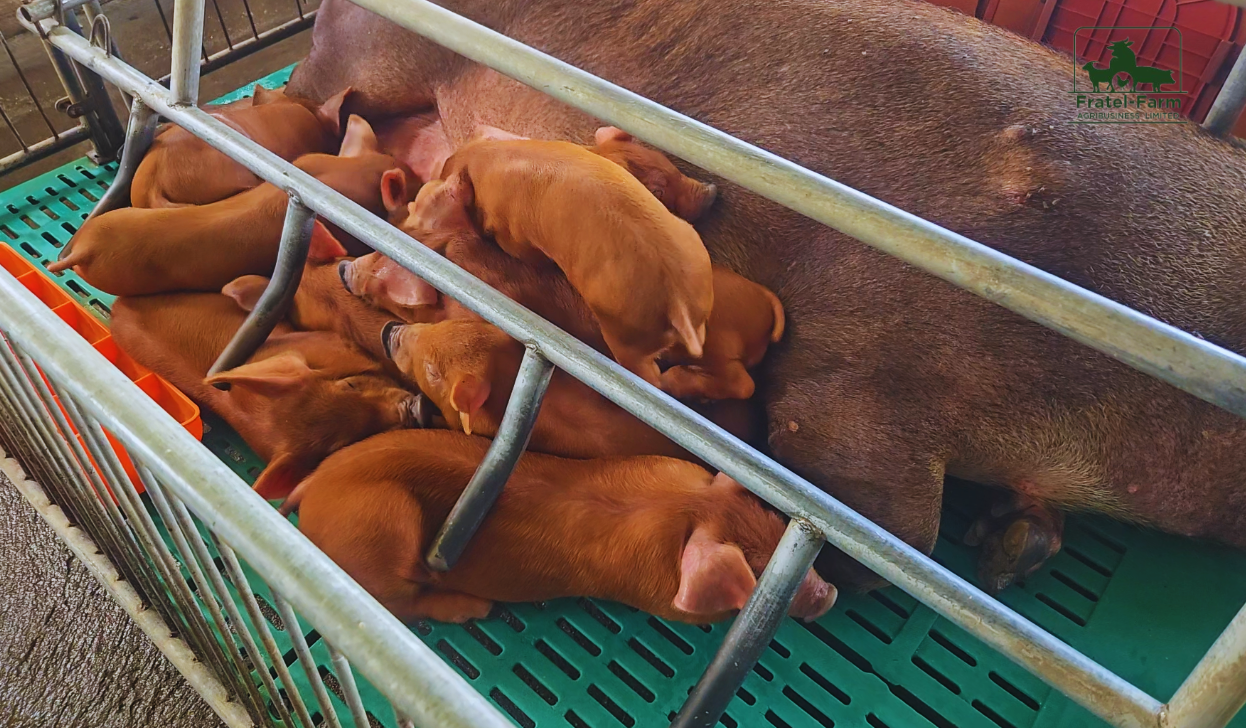
Every 100 kg market pig was once a tiny piglet. The success of your piggery isn't determined when the pig reaches market weight — it begins in the first few weeks of life. Poor nutrition, disease, stress, or improper management during the piglet stage can affect growth for months, making it difficult for pigs to ever reach their full genetic potential.
A healthy start creates a profitable finish.
🍼 Stage 1: Piglet Management (Birth to Weaning)
This is the most delicate stage of a pig's life. The focus isn't rapid growth — it's survival and a strong start. A successful piglet should receive:
- Colostrum within the first few hours of life.
- A warm, dry, draft-free environment.
- Clean drinking water as it grows.
- High-quality creep feed before weaning.
- Proper iron supplementation and routine health care.
- Close observation for illness and poor growth.
A weak piglet rarely becomes a high-performing finisher.
📈 Stage 2: The Foundation (Weaning to Week 8)
This is where many farmers become worried. After weaning, piglets often experience stress as they adjust to a new environment and a solid diet. Growth may appear slower than expected, but this is a normal adaptation period.
Rather than changing feeds every week or experimenting with unproven supplements, focus on consistency. Provide:
- Good-quality feed.
- Plenty of clean water.
- Comfortable housing.
- Excellent hygiene.
Consistency beats constant changes.
🚀 Stage 3: The Growth Phase (Weeks 9–18)
This is where pigs make their biggest gains. During this period, feed conversion is generally at its best, allowing pigs to efficiently turn feed into muscle. This is also the stage where poor management becomes expensive.
Poor ventilation. Dirty water. Overcrowding. Inferior feed. Any of these can reduce growth and delay market readiness.
This is where profit is built — or lost.
💰 Stage 4: The Finishing Phase (Weeks 19–22)
As pigs approach 90–100 kg, they continue growing, but each additional kilogram requires more feed than before. Many commercial farmers target this weight because it often provides the best balance between growth and feeding costs.
Keeping pigs beyond this point should only be based on market demand and economics — not emotion.
The goal isn't the heaviest pig. It's the most profitable pig.
📊 What This Growth Curve Is Really Telling You
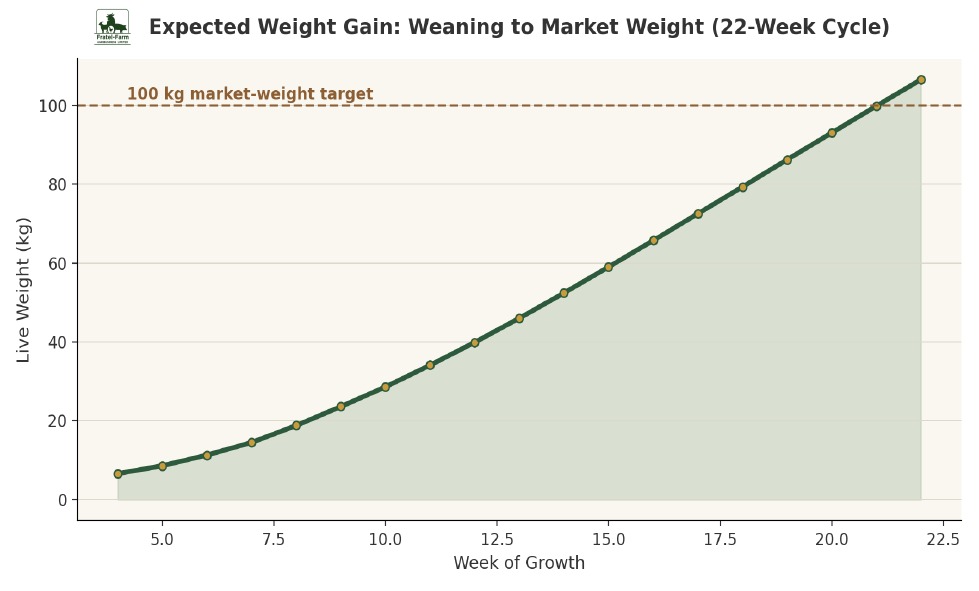
A pig doesn't need the same management from birth to market. Each stage has different nutritional, health, housing, and management needs. Successful farmers understand these changes and adjust accordingly.
They don't simply feed pigs. They manage growth.