
Every pig farmer wants bigger pigs. It's easy to believe that the longer you keep feeding a pig, the more profit you'll make. But what if there comes a point where every extra kilogram costs more to produce than the one before it?
In this episode of Reading the Pig, we'll explore Feed Conversion Ratio (FCR) — what it means, why it matters, and how it can help you decide the best time to sell your pigs.
🌽 What Is Feed Conversion Ratio?
Feed Conversion Ratio measures how efficiently a pig converts feed into body weight.
📈 Young Pigs Grow Efficiently
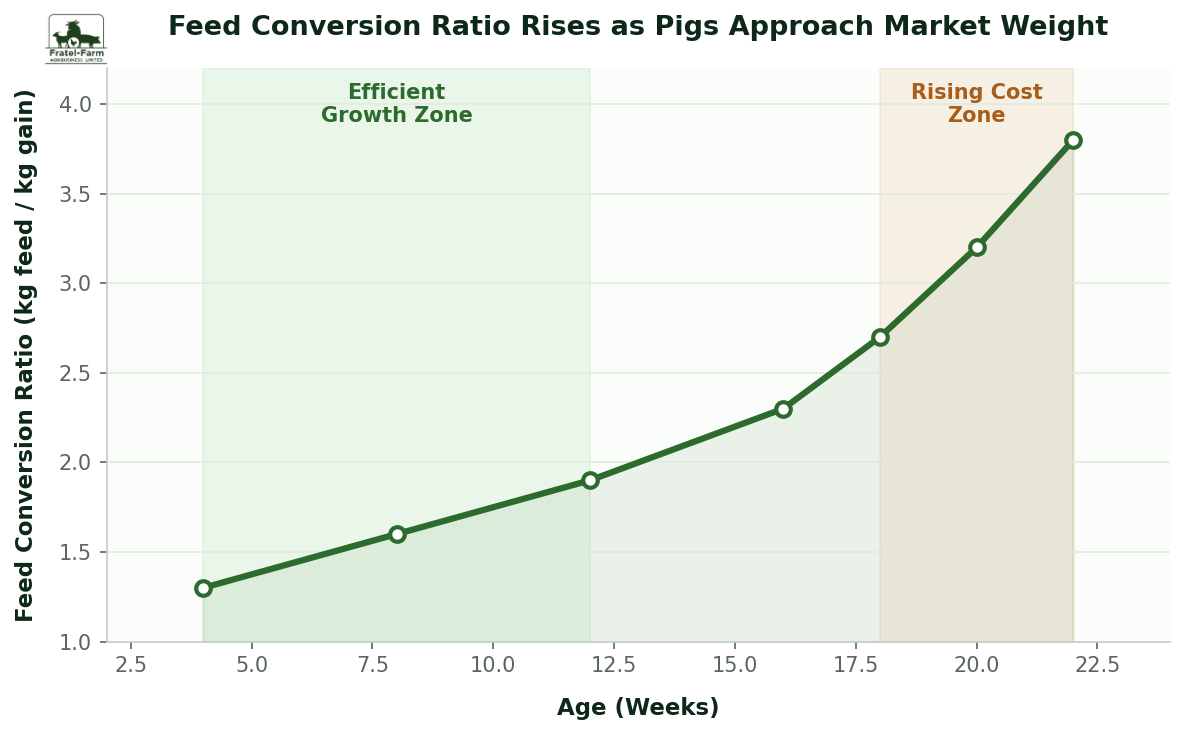
As pigs grow from weaning into the grower stage, they convert feed into muscle very efficiently. Every kilogram of feed produces significant weight gain. This is the period where your investment gives the highest return.
⚠️ Bigger Pigs Eat More
As pigs approach market weight, their appetite increases. However, growth begins to slow. This means they require more feed to gain each additional kilogram — you're spending more, but getting less in return.
💰 Where Profit Begins to Decline
Many commercial farmers target 90–100 kg because this is often where profit is highest. Keeping pigs beyond this point may only be worthwhile if:
- The market pays more for heavier pigs.
- Feed is affordable.
- You're producing breeding stock.
🚫 Common Mistakes
- ❌ Keeping pigs because they "still look small."
- ❌ Ignoring feed costs.
- ❌ Waiting for a better price without calculating expenses.
- ❌ Measuring success by size instead of profitability.
📊 Read the Numbers
Successful farmers monitor more than weight. They monitor:
- Feed consumed.
- Growth rate.
- Feed costs.
- Market prices.
Good records lead to better decisions.
🎬 Conclusion
A pig doesn't become profitable simply because it weighs more. Profit comes from balancing feed costs, growth rate, and market value. The best pig farmers don't just feed their animals — they understand the economics behind every kilogram gained.
At Fratel Farm Agribusiness, we help farmers make data-driven decisions that improve productivity and profitability.
"A kilogram gained cheaply is worth more than a kilogram gained expensively."
"Don't measure success by the weight of your pig — measure it by the profit in your pocket."